

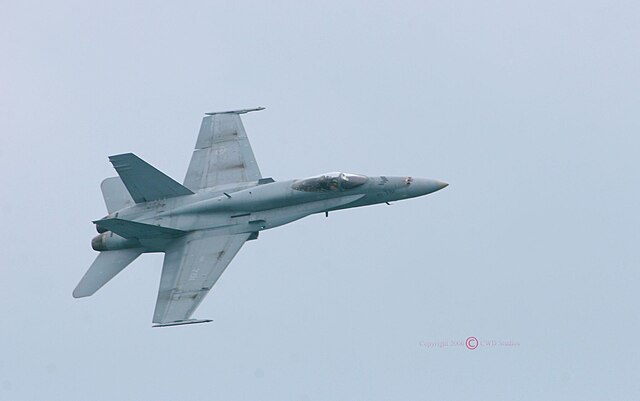
The Royal Canadian Air Force (RCAF) made history on Friday by landing fighter jets on a highway in Estonia, a NATO ally. Canada was part of an international military exercise called Tarassis 25 led by the UK in which 10 countries participated. Canadian mainstream media projected it as a major success that not only allowed Canada to register its presence in Europe but also strike a defiant note against Vladimir Putin-led Russia, which continues to make aggressive moves against Eastern European countries like Estonia, Poland and Romania. But is it that simple?
Apart from the UK, the countries that participated in Tarassis 25 were Denmark, Finland, Iceland, Latvia, Lithuania, the Netherlands, Sweden, Norway and Estonia, The Globe and Mail reported. Fighters landing on highways isn’t new either; Sweden officially advertises its Gripen fighter as one capable of operating from narrow roads, while India has landed its Russian-origin fighters on various highways in the north of the country several times. This adds depth to operational capabilities of a country while facing an adversary that has more powerful, long-range weapons—should airfields be neutralised through missiles, roadways could offer alternative runways to launch air power. But how much muscle can Canada realistically flex, especially to a potential adversary like Russia?
The RCAF’s fleet comprises 79 fighter jets of which CF-18 Hornets form the backbone, according to the official website of the Abbotsford International Airshow. But these are at the end of their service life. They were supposed to be replaced by 88 US-made F-35 fifth-generation fighters, but that deal is stuck in limbo over Canada’s trade war with the US. While Canada has a contractual obligation to buy 16 of the 88 F-35s, PM Mark Carney, Bloomberg reported in June this year, has been considering European 4.5 generation fighters to make up the rest of RCAF’s fighter fleet. This was confirmed even by Industry Minister Melanie Joly who said Canada could go for fewer number of F-35s and buy Sweden’s Gripen-E fighters. This has been seen as a pressure tactic to force Lockheed Martin, which makes these fighters, to give Canada more economic benefits for purchasing this fighter. So far, only the US, Russia, and China have fifth-generation fighters.
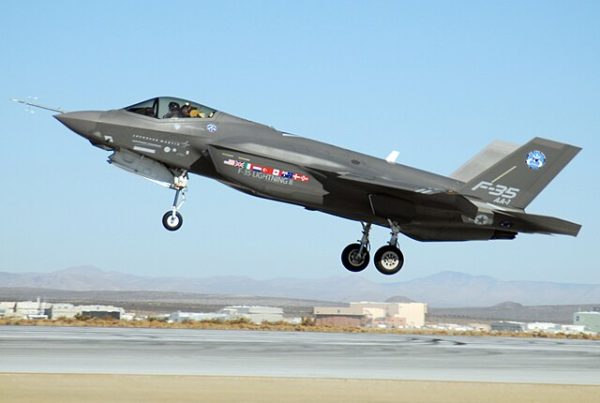
But even if Canada gets these fighters, it won’t be until 2032 when the entire fighter fleet will be suitably replaced. In such a scenario, Canada’s sabre-rattling in Russia’s backyard may not be a good idea. However, this has a context. Russia has been sabre-rattling in Canada’s Arctic coast for a while now, and with Donald Trump-led US increasingly becoming an unreliable ally, Canada is forced to look towards Europe for support, especially among those Arctic allies that are themselves insecure of an assertive Russia. Still, Estonia is a curious choice for Canada to send a response to Russia, for this was a former Soviet republic and therefore a sore point for Putin’s Rusia that sees the collapse of the Soviet Union as the “greatest geopolitical catastrophe of the 20th century.” Estonia was the first Soviet republic to secede from the USSR.
So, is it in Canada’s best interest to provoke Russia? Sher-E-Punjab’s listeners were evenly split on this on Friday. While some thought the Mark Carney government needs to shore up the country’s economy and stop making the US more hostile, others felt this is the right thing to do because Putin-led Russia has got emboldened due to the lukewarm response by Trump-led US to the ongoing war in Ukraine.