



TMS for treatment-resistant depression is now available for the first time in Fraser Health
About 20 per cent of Canadians will experience clinical depression at some point in their lives. Symptoms of sadness and loss of interest in daily activities can be triggered by major life events such as job loss, the end of a relationship, or other stresses. Sometimes there is no obvious cause. Treatment often includes antidepressant medication, psychotherapy or both. But for some people, these treatments are ineffective.
Thanks to funding from the Royal Columbian Hospital Foundation, transcranial magnetic stimulation (TMS), also known as repetitive transcranial magnetic stimulation, is now available at the Mental Health and Substance Use Wellness Centre at Royal Columbian Hospital.
“Being able to offer TMS in the public system will improve patient care because there is a huge unmet need for this treatment,” says Dr. Nathan Unger, psychiatrist. “TMS has a really unique place in the treatment algorithm for patients with depression who haven’t responded to multiple medications.”
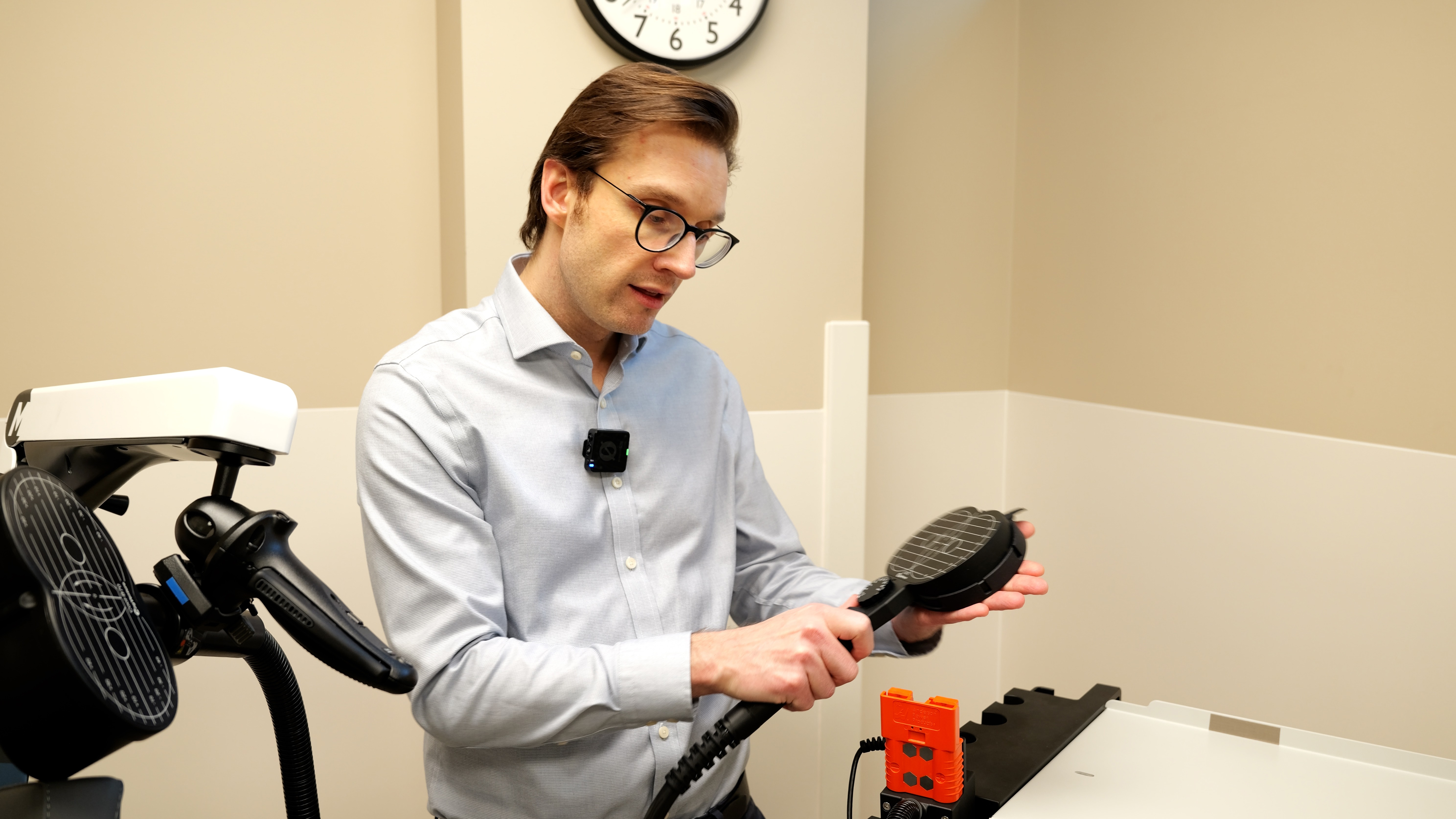
TMS uses magnetic fields to stimulate nerve cells in certain areas of the brain that influence mood and other mental states. A magnetic coil is placed over the head to deliver targeted energy to help regulate brain activity and improve symptoms of depression.
The treatment is available to eligible adults receiving support from a Fraser Health mental health and substance use program, with a focus on clients experiencing treatment-resistant depression.